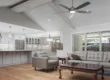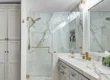


Now, if you are considering remodeling your home, it is important to start planning your space, but not only planning your space, but setting energy efficiency goals at the same time. Remodeling your home allows you to locate and repair energy leaks while still ensuring you meet your aesthetic space planning desires. Keeping in mind your budget, it is essential to balance out your energy efficiency goals along with your aesthetic preferences for your home project.
Energy Efficient Home Remodeling
In this article, we’ll look at five of the best ways you can improve energy efficiency when remodeling your home.
A Layer of Insulation in the Attic
According to the U.S Department of Energy fact sheet concerning insulation, more is always better. For the various types of insulation, R-Values by zone and correct amounts for your region, go to https://www.energy.gov/sites/prod/files/guide_to_home_insulation.pdf
Newer homes tend to have better insulation compared to older ones built several decades ago. If you have an older home, you will benefit greatly from an upgrade. Since hot air rises into the attic, that’s where a lot of the heat is lost. So, an extra layer of insulation during the renovation project will help you save money on energy consumption.
 New Energy Efficient Doors and Windows
The goal of energy–efficient doors and windows is to eliminate drafts and air leakage. These energy efficient doors and window make it much less expensive to both heat and cool your home. If your home has a single pane window, then using sealing around the frame isn’t going to be enough. Newer windows will help perform a more efficient means of keeping the temperature inside the home regulated by preventing hot or cold air from escaping from small gaps. Glass or “patio” doors, especially sliding glass doors, lose much more heat than other types of doors because glass is a very poor insulator. To find more information about Energy star windows and doors, you can go to https://www.energystar.gov/ia/partners/manuf_res/downloads/PartnerResourceGuide-LowRes.pdf
Improve the Water System’s Efficiency
Now there are a couple of ways in which you can save on the costs associated with your water consumption. One way to do it is by installing low-flow plumbing fixtures; including toilets, showerheads, and faucets. The good news is that they are relatively inexpensive and installation is fairly easy.
Heating Systems
One of the most popular heating systems today when remodeling is installing a tankless water heater which ensures hot water is produced on–demand. So, there is less use of energy. Tankless heaters can be 24-34% more energy-efficient than regular water heaters for households that use 41 gallons or fewer of hot water daily. Tankless heaters can be 8-14% more energy-efficient for households that use around 86 gallons daily. Also, a new conventional water heater that’s energy–efficient will help to improve savings especially if you have a large family. However, the tankless water heater option is the best if you must have hot water on demand.
 Cooling Systems
You can address cooling issues by using what is called a passive solar design principle, which improves natural ventilation. You will want to carefully plan and place windows and skylights for the best flow of air. We especially recommend skylights because they can be at a much higher point in the home that allows the warm air to rise while at the same time drawing in cooler air from windows below. Also, if you are adding a new room, you may consider a ductless heating and cooling system.
Call a professional HVAC company to find out if a ductless system is the best choice for your specific remodel.
Conclusion
Renovating your home is a big decision, but with careful research, planning, a clear set of goals in mind and with a highly quailed professional remodeling company, it can be extremely rewarding. Not to mention the fact that remodeled energy–efficient homes command a higher price on the market, and adds greater value to your home and family.